
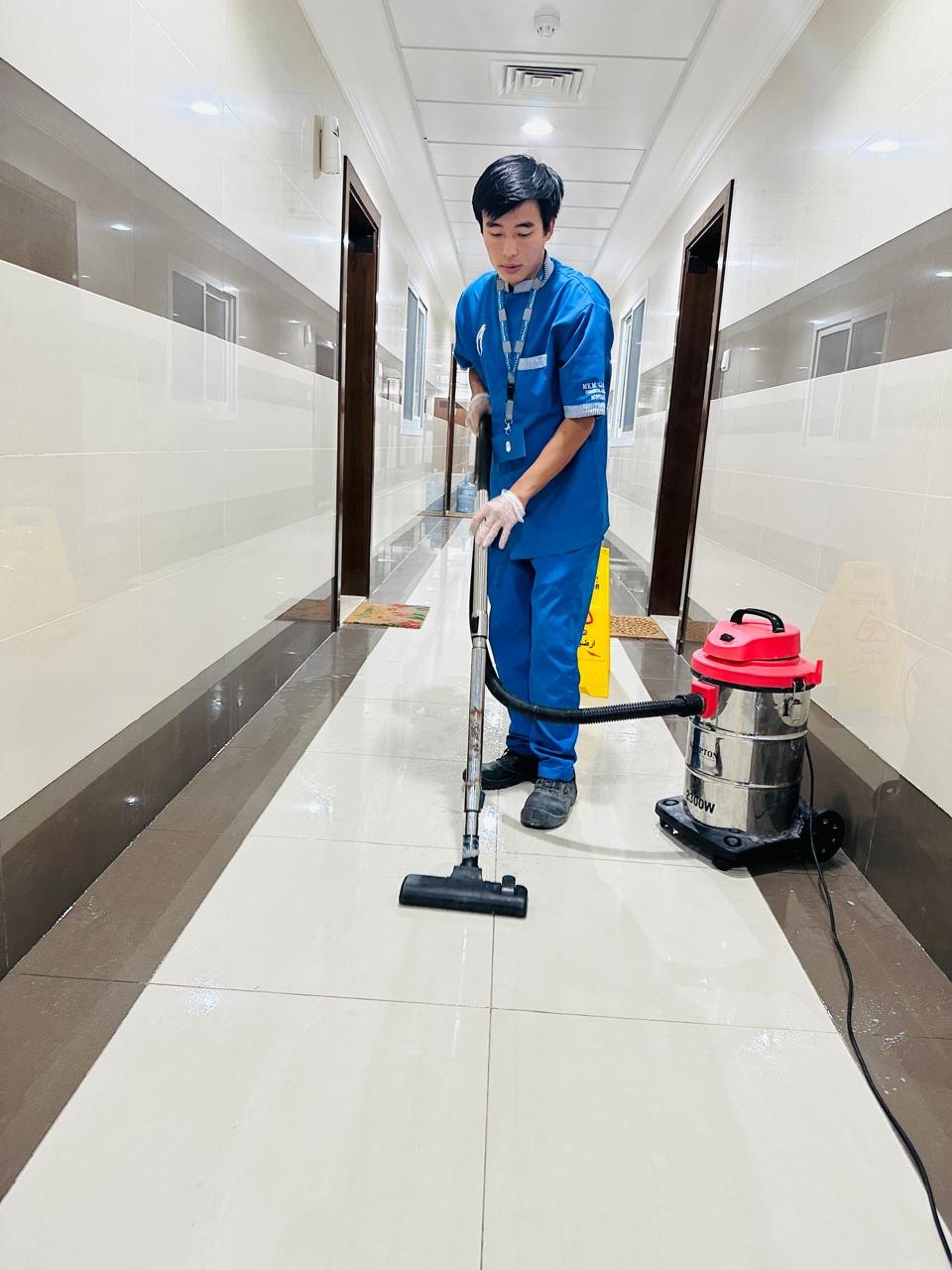
An office cleaning service-level agreement should do more than confirm how many cleaners attend the building. It should explain what successful delivery looks like, who will check performance and what happens when the team misses a requirement. For Dubai facilities managers, a clear SLA also helps align the cleaning operation with working hours, security procedures, tenant expectations and the changing use of meeting rooms and shared spaces.
Separate the cleaning specification from the SLA
The cleaning specification lists areas, tasks and frequencies. The SLA defines how the team will measure and manage delivery. Both documents are necessary, but they serve different purposes. A requirement to vacuum work areas each evening belongs in the specification. The inspection process, reporting responsibility and corrective-action procedure belong in the SLA.
First, start with an accurate office schedule covering reception, workstations, meeting rooms, executive areas, washrooms, pantries, lifts, corridors and any external or shared spaces included in the contract. MKM’s office cleaning service provides a useful reference for the areas that may form part of a managed office programme.
Define the service outcome for each area
Define a practical outcome for each important area that inspectors can verify. Avoid vague terms such as “perfect,” “always spotless” or “clean to a high standard” without explaining what they mean. A reception outcome might require floors free from visible debris, furniture correctly presented, touchpoints attended and entrance glass free from obvious marks at the inspection time.
Occupied offices need realistic rules for issues that arise after cleaning. Next, define which areas receive scheduled daytime checks and which the team services only during the agreed main shift. If the team cleans a pantry early in the morning and staff use it heavily throughout the day, the contract must state whether it includes additional checks.
Set the service hours and access conditions
The SLA should state normal shift times, permitted access windows and any restrictions on noisy machinery or disruptive work. Include procedures for secure rooms, executive offices, server areas and spaces that require an escort. If cleaners must wait for access, the reporting process should capture the delay so that the supervisor does not automatically treat a missed task as a cleaning failure.
Define the arrangements for weekends, public holidays, office events, evening meetings and emergency requests. The contract may include these services, charge for them separately or handle them through an approved variation. The important point is to decide before the requirement arises.
Clarify staffing and continuity responsibilities
Record the agreed shift structure and distinguish the roles of cleaners, supervisors and any specialist operators. The SLA should state who checks attendance, who receives absence notifications and who communicates replacement arrangements. Avoid relying only on a fixed headcount; connect staffing to the agreed workload and service windows.
Where the contract includes deployed personnel and on-site supervision, define responsibility for rosters, attendance evidence, induction and day-to-day instructions. The cleaning manpower and managed deployment page explains this operational distinction.
Agree an inspection method
Inspections should be repeatable. Identify the areas inspectors will review, the people involved, the recording method and the frequency of formal review. If the SLA uses a score, describe the scoring criteria so that two inspectors would reach a reasonably consistent result.
A balanced SLA can monitor:
- Completion of scheduled routine and periodic tasks
- Condition of agreed inspection areas
- Attendance and supervisor coverage
- Response and closure of reported service issues
- Completion of required records and reports
- Corrective action for recurring problems
Do not overload the contract with dozens of measures that nobody reviews. Select a manageable group that reflects the office’s actual risks and priorities. Confirm who signs off inspection results and who reviews a disputed result.
Define issue priorities and response procedures
Not every cleaning request has the same urgency. A spill affecting a walkway needs a different response from a request to detail-clean an unused storage room. Create clear issue categories and agree the communication channel for each category. Therefore, base response periods on the office operation, site coverage and realistic availability rather than copying them from another contract.
The SLA should distinguish acknowledgement, arrival and final resolution. The team may acknowledge an issue quickly, but it may need access, equipment or additional approval before the team can close it. For recurring failures, include a root-cause and corrective-action process rather than repeatedly recording the same complaint.
Confirm chemicals, equipment and consumable arrangements
State whether MKM, the client or both parties will provide cleaning chemicals and equipment. List the responsibilities clearly, including storage, stock monitoring, maintenance and replacement. Do the same for washroom consumables and waste bags.
If the office has product restrictions, delicate finishes or approved supplier requirements, include them in the tender information. The team must use every selected product according to its label and site instructions. Equipment should be suitable for the floor finish, area size and permitted service window.
Include training and site compliance
The SLA should name the training records that are relevant to the work. These may cover site induction, task methods, chemical handling, equipment use, reporting, emergency procedures and client-specific rules. Training should relate to the actual duties rather than exist only as a general statement in the proposal. MKM’s training approach shows how operational instruction supports consistent service delivery.
Also record requirements for uniforms, identification, access cards, keys and confidentiality. Where the team uses photographs in service reporting, agree what staff may photograph and how they may handle the images.
Control periodic work and service changes
In addition, create a calendar for periodic tasks such as carpet extraction, upholstery cleaning, high-level dusting, machine floor care and detailed glass cleaning. The SLA should state how the team evidences completion and reschedules postponed work.
Include a written change process for alterations in occupancy, layout, operating hours or area. A significant change may affect hours, equipment or supervision. The client and MKM should review and approve it rather than absorb it informally into the existing SLA. Buyers comparing broader options can also review MKM’s commercial cleaning service.
Office cleaning SLA checklist
- Does the SLA list all included areas and exclusions?
- Does the SLA separate routine, daytime and periodic tasks?
- Can inspectors verify the written outcomes?
- Does the SLA define shift times, secure access and holiday arrangements?
- Does the SLA state clear staffing, supervision and absence procedures?
- Does the SLA include a repeatable inspection and corrective-action process?
- Do both parties agree on issue priorities and communication channels?
- Does the SLA name chemical, equipment and consumable responsibilities?
- Does the SLA record training and site-specific compliance requirements?
- Does the SLA control the variation process?
Build the SLA from the actual office
Finally, a strong SLA begins with the workplace, not a generic template. MKM’s site survey and mobilisation process can help identify areas, access conditions and service priorities before both parties finalise the SLA. Request an MKM site survey for your Dubai office.
Related MKM evidence: See how this SLA framework supports MKM’s wider commercial cleaning experience across the UAE.
